The campus is designed using neuro-architecture principles to enhance creativity, comfort, and effective learning.
Integrated slides within the building encourage joyful movement and make the school environment playful and engaging.
Cozy cave-like spaces under ramps serve as reading and exploration corners, fostering imagination and quiet reflection.
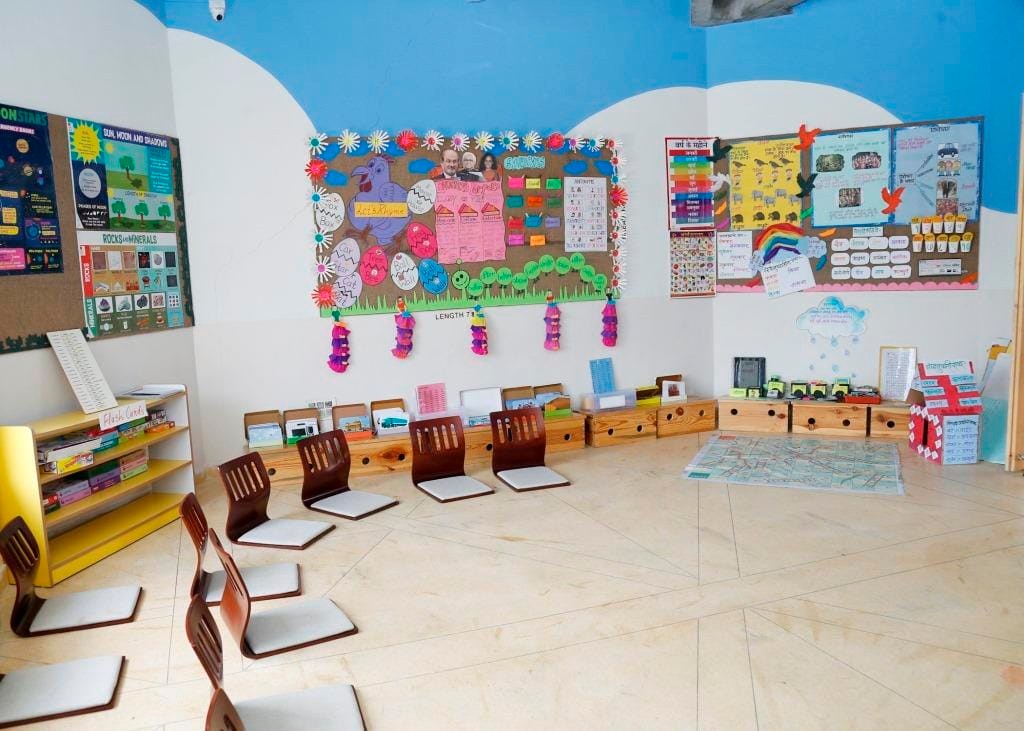
Designed to promote collaboration, these classrooms support flexible seating and interactive learning.
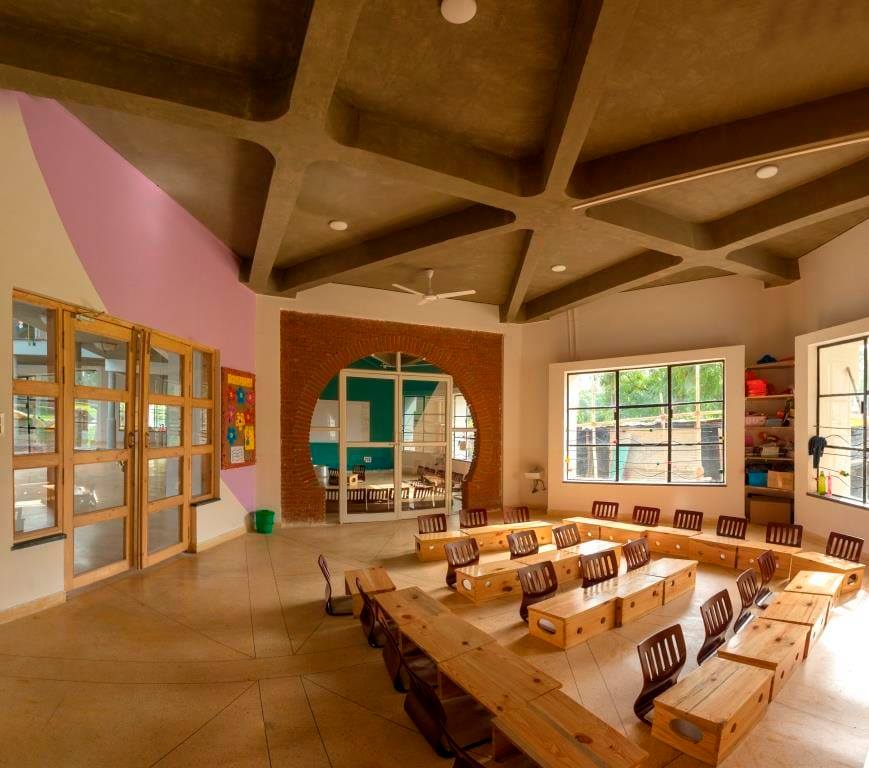
Innovative seating arrangements encourage better posture, flexibility, and active engagement in learning.
Inspired by the philosophy of Totto-Chan,a Japanese girl who wished of having school in a train, the library is set inside a train model, encouraging a love for reading while embracing creativity and child-centered learning.
Asia’s first grand metal sculpture of Mahatma Gandhi, recognized by the Asia Book of Records and India Book of Records, stands as a symbol of the school’s commitment to Gandhi’s Nai Talim philosophy of education.
An outdoor space where scientific concepts come alive through interactive models and experiments.
Walls across the campus serve as storytelling canvases, showcasing art, knowledge, and student expression. The book wall, in particular, promotes a love for reading.
The entrance reflects the school’s philosophy of innovation and curiosity. Inspired by the horticultural technique espalier, the design symbolizes growth and learning, complemented by a child sculpture representing curiosity.
Each classroom features window grills designed with scripts from different Indian languages, promoting cultural awareness and linguistic diversity.